
Cannes 2026 – UCR Prize film, ‘Elephants in the Fog’; ‘Report to Mother’ – Palme ‘Fjord’ and ‘Hope’ – reviews
We look back at the films we saw – and reaction in Cannes itself…
Elephants in the Fog – Love is a difficult terrain
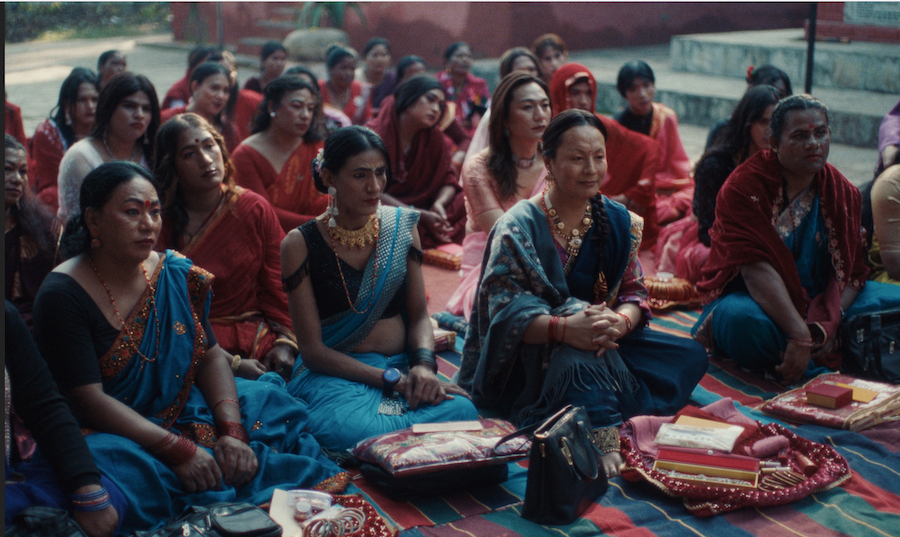
Director: Abinash Bikram Shah
1 hour and 43 minutes
ON THE SURFACE not a love story but so much about community, resilience and strength and dignity of character. Abinash Bikram Shah’s film, set in the Himalayas in Nepal, is a quiet study of difference and the power of leadership.
Pirati (Puspa Thing Lama) can consider herself unlucky not to have won an acting award in the Un Certain Regard category (one below Competition at Cannes) and to be fair we didn’t see the other films in this section. She is at the centre of this film; is its core and her performance elevates the whole story.
Set among the Kinnar community – a third gender group whose origins span centuries and ancient times across South Asia – Shah weaves a hugely accessible and relatable tale which goes beyond often conventional arguments between tradition and modernity.
He places Pirati and her group of women – ‘daughters’ in a place which itself is under threat.
Building and development continues apace and forest areas, especially at the lowlands, continue to be chopped down to make way for housing and settlement. This is also elephant country and who can explain to these magnificent creatures – the binds that we humans face… They are like a backdrop or foreboding – a natural form of justice that will deliver its own verdict.
The story is simple: a young, new entrant to the Kinnar community goes missing…There are formal rituals and observances and Pirati must find her ‘daughter’ and believes she may have come to harm.
Based partly on a true event, the reality is complex and we see Pirati having to make difficult moral choices. The wider community too must inspect their belief systems too – when Pirati goes to the authorities – the contradictions are laid bare. It’s a powerful film and deserves to be widely seen and against the climate where people are often asked to take one side or another – this is an important reminder that human existence is messy and compromised – even when intentions are sincere and offer no real (physical) harm to anyone.
The filmmakers celebrations in Cannes on the announcement of the Jury Prize went viral. Shah has become an eloquent spokesperson for plight of such marginalised communities – those who don’t conform but pose no (real) threat to anyone or society.
The film has secured distribution deals for France, Germany, Austria, Brazil and will release theatrically in Nepal itself, according to reports.
Acv rating: **** (all out of five)
Report to Mother – An awkward dance: humanity and politics
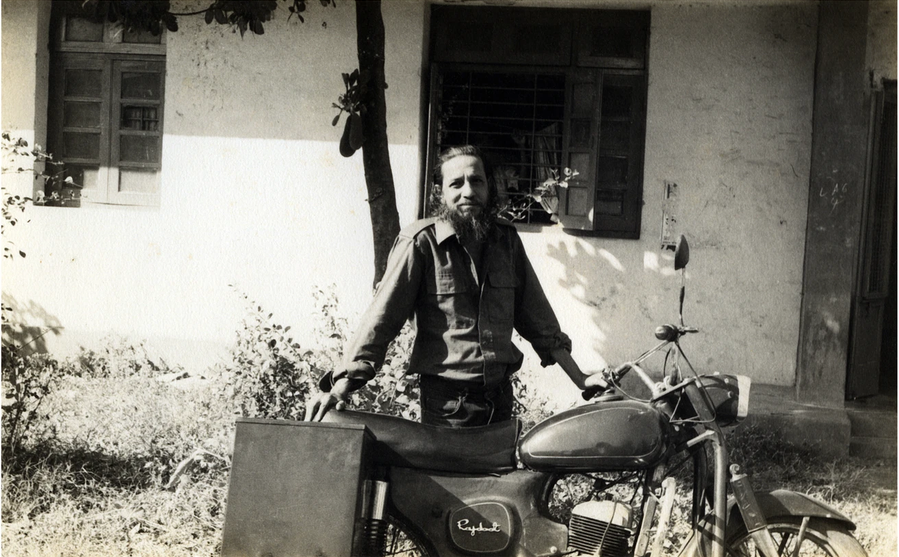
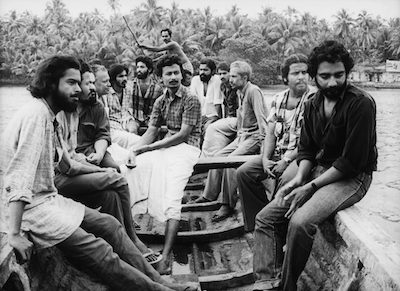
MAVERICK writer-director and bon vivant by all accounts, John Abraham probably never got to see just how impactful his film, ‘Amma Ariyan’ -‘Report to Mother’ would become. Many influential independent filmmakers (such Cannes winner Payal Kapadia) in India cite it as an important production.
Abraham passed not long after its ‘release’ (in 1986) – it isn’t a conventional film – it was crowdfunded and features many non-professional actors and was screened communally and often without ticket sales.
Abraham’s skill is to construct a simple story and then let it literally play out almost in a documentary style – it’s hybrid, in that it mixes both real footage and historical events with the story itself.
A road movie – our central character Purashan (Joy Mathew) starts out in North Kerala (Malabar) and has learnt that he is a recipient of an educational scholarship in Delhi and must leave his home. On the way to inform a friend, he sees a body and half recognises it. From another friend, he learns it is someone he knows and the cause of death is suicide. He feels compelled to inform all who knew the young man and his own mother who lives in central Kerala (Kochi).
Partly informed by the Naxalite movement which swept parts of Kerala and West Bengal in the 1960s and early 1970s, and still survives in some remote and rural areas in India – it’s a form of Marxism, but believes violence and terrorism, especially against ‘the ruling class’, are absolutely necessary to foment social and political change. Our lead character is sympathetic but disavows the violence – it’s an incredible film in the kaleidoscopic ground that it covers culturally – at one point Madonna (the 1980s pop phenomenon) is represented in a poster and a local rock pop band plays – at the beginning, there is more traditional Indian classical music.
Our interviews (pending) with editor Bina Paul and Mathew himself, in Cannes, illuminate what it is a very watchable and entertaining film and has something to say about humanity and how politics can and should be more than just about power, winning elections and/or equalising everything and all. Abraham offers no easy answers and this is all in keeping both with the spirit of the film and dare we (as in Bird No.1) say it (as part of the Mallu foreign-born diaspora), the many peoples of Kerala itself.
Acv rating: ****
Fjord – Dry and strangely unemotional; subtlety wins
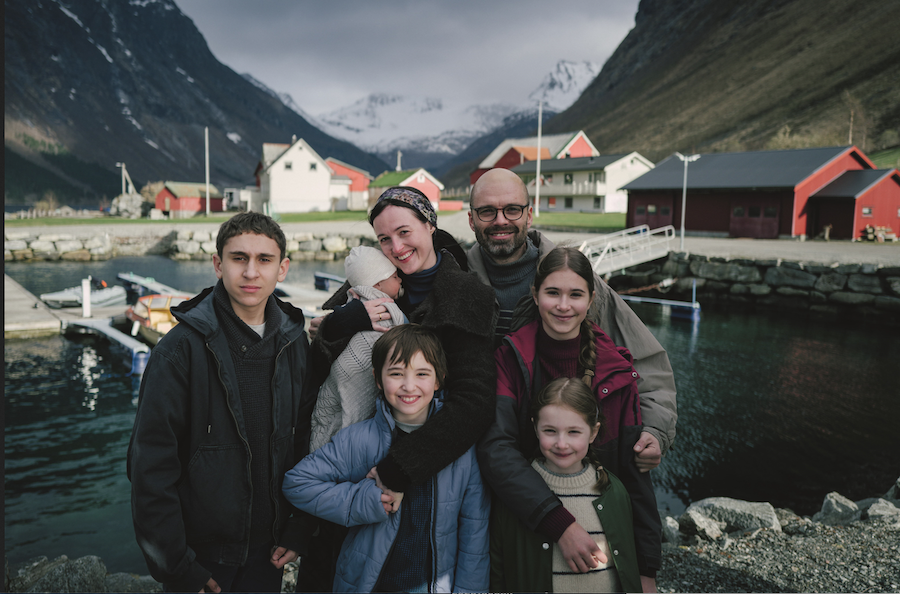
Christian Mungiu
2 hours and 26 minutes
DISAPPOINTING shouldn’t be the word you use for the Palme d’Or winner but sadly it is what comes to mind when we think of writer-director Cristian Mungiu’s winning return to the Croisette (following ‘4 Months, 3 Weeks and 2 Days’ – in 2007).
Now he has two Palmes – this film ‘Fjord’ is set in a remote Norwegian fishing village.
Conservative Christian couple – Sebastian Stan as Mihai and festival favourite from ‘Sentimental Value’ hit from last year, Renate Reinsve, (Lisbet) move here from Romania, because of the better job prospects and the strong education on offer for their five children.
All goes awry, however, when Dad disciplines one of his daughter’s for misbehaviour; schoolteachers note and before you know it, the state has intervened to protect the family’s children – including the couple’s baby, just months old.
It’s heavy, slow, ponderous – not without merit – but the Nordic subtlety and lack of set piece dramatics, meant it was harder to follow than it should have been.
Also on a personal note, we saw this film at the Mayor of Cannes’ special all day screenings on the Sunday (May 24) after the festival, thanks to a donation of ticket – it was the French version, so there were no English subtitles for the Norwegian but around 35-40 per cent of the film is in English.
It’s an interesting subject – there is a Bollywood film which covers similar territory (‘Mrs Chatterjee vs Norway‘) – Stan is very good, Reinvse doesn’t have a lot of screen time – it is very Scandinavian but it leaves something to be desired and isn’t satisfying in the way the top award winning film at Cannes should be…but the jury, led this year, by Korean Park Chan-wook, can be idiosyncratic and this was only the second Competition film we saw – the other is below… it will release in France on August 19 and head to Europe in November, say reports. Stan and Reinvse will need to feature heavily along with its Palme credentials for it to breakthrough, one feels.
ACV rating: ** (out of five)
Hope – Alien invasion lifts plodding mystery…
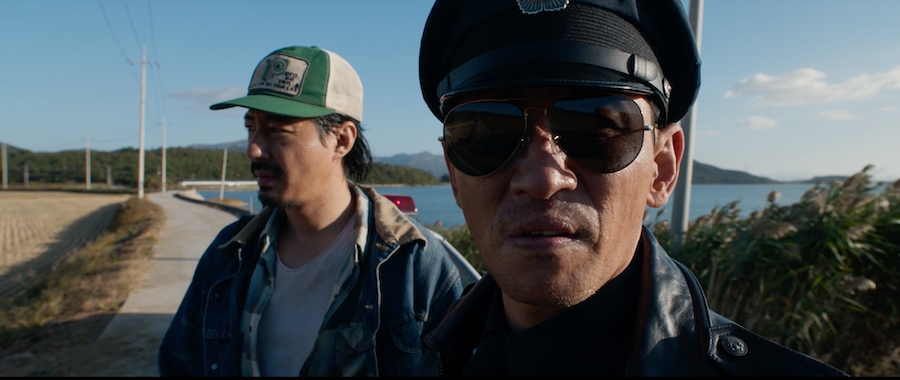
Na Hong-jin
2 hours and 40 minutes
A WHIMSICAL personal selection due to scheduling considerations at the end of the festival – this South Korean set and directed film by Na Hong-jin turned from ordinary to extraordinary – and dull to stunning over the course of the two hours plus.
The first hour is a little unremarkable – strange animal maulings are taking place in a border area and coastline, close to North Korea (the town is Hope Harbour and it is in the Demilitarised Zone) – locals suspect a tiger on the loose – but one that doesn’t interest itself in eating the animals it attacks.
Slowly, the scale and ferocity of violence became far clearer – whole communities have been laid waste – as though an invading (invisible) army has descended.
Once we see who is responsible the film has a totally different feel. The CGI used comes into its own – and even if some of the figures – including star couple Michael Fassbender and Alicia Vikander look a bit too ‘Avatar‘, this could be a South Korean franchise to look out for in coming years. We enjoyed it but the first hour… Wait, be patient, go with it, the rewards come later and at a reputed US$50m or so, it comes good, in the end and does ask that most profound of questions – are we the only ‘intelligent’ species in the whole galaxy? What if… It is expected to be out in South Korea this summer and in the US and elsewhere in the Autumn. Neon has boarded and as have home film streamer Mubi.
ACV rating: ***
All pictures Courtesy of Festival De Cannes and film production houses – top picture: ‘Elephants in the Fog‘
All reviews: Sailesh Ram, editor www.asianculturevulture.com