Moving dreams: States of Verbal Undress
March 7 2014
New play uses real life testimony to breathe depth into fierce political topic…
IMMIGRATION remains one of the most contentious issues of our time.
Into this boiling cauldron of emotions steps playwright and actor Rani Moorthy with a new production, “States of Verbal Undress” (SoVU).
Opening at The Lowry in Salford this evening (March 7), it goes on a scheduled tour until May 22, playing largely in the north of the country.
“I am really interested in capturing the voices of people who don’t usually find their way onto the British stage,” Moorthy told www.orangered-oyster-271411.hostingersite.com.
There are only two actors in “SoVU”, Moorthy herself and Curtis Cole.
In all, the two play some 20-25 characters, deploying a range of accents and giving voice and expression to among others, a Burmese activist, a Vietnamese drag artist, a man of Chinese origin, born and raised in Jamaica and who speaks like a local there.
The source material for these stories is testimonies from actual people interviewed, and covers a range of narratives of those who have come to live in Britain.
The variety and scope isn’t simply to show the racial diversity of Britain – most people have a basic understanding and appreciation of that (if not always positive).
Moorthy’s inspiration is to go further and deeper, behind the very surface of this subject.
In the political debate, it’s easy to talk about “Poles” or “Czechs”, “Asians” or “Afro-Caribbeans” as politicians do – presenting them subtly as the “other” and then, as a consequence, diminishing them and reducing their humanity, as well their own hopes and dreams, to no more than a tussle over numbers, statistics and empirical data.
“We are dealing with human stories,” stated Moorthy, “whether it’s someone who is coming here, highly traumatised and fleeing from genocide or someone moving from a Cheshire village to Manchester – their journey may not be as epic but in terms of getting to know this person and the human story, it’s important.”
It is that which is at the very heart of this production. We all have a story – whether you’re an immigrant or not, she intimated.
Don’t see it too as a play just about difference or diversity – she’s probing deeper.
“It isn’t just about accents. The easiest theme would have been race or ethnicity but the whole idea of ‘verbal undress’ is catching someone off guard and when you are caught off guard, true stories emerge.
“You meet this Vietnamese man, he is Catholic, works for the church and is a volunteer – in everyday life no one would know his secret life of being a refugee. We know he is a Vietnamese boat person, who went to Japan and was in refugee camp there and saw Boy George and Culture Club on television and understood that he had this attraction to men – that they could wear make-up and be attractive to men – that was when he was seven and we know he has met The Pope and Boy George.”
From the outside, it can look like a stereotypically right (on) play – but Moorthy is too deft a writer, and Ruth Carney-Nash too experienced a director to let such a work slide into a place of comfortable assertions.
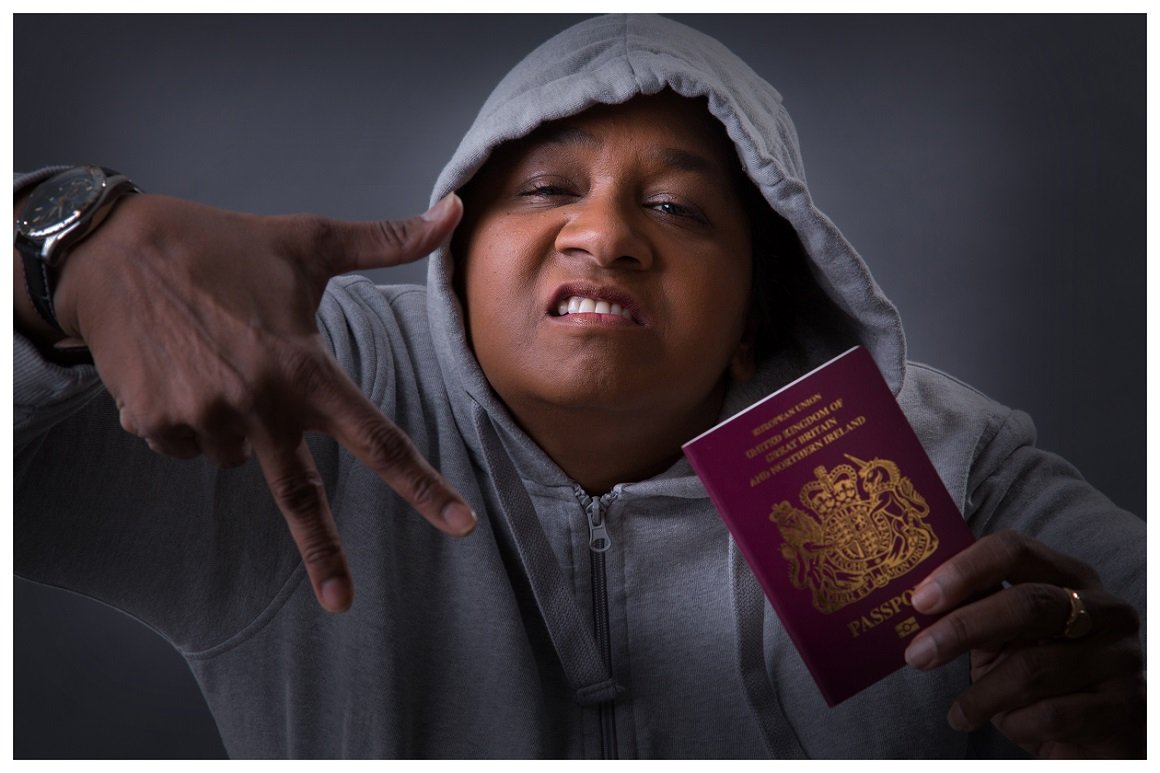
Moorthy has drawn on her own experience of becoming a British citizen, after being Malaysian for such a long time, and having to sit a UK citizenship test recently.
“A lot of people don’t even know it exists, and it’s easy to fall back on stereotypes but I’ve looked for quirky, funny, interesting, refreshing stories,” she said.
 At one level it’s easy too to have a parade, a cute celebration of all human complexity and diversity, but it doesn’t always make for a coherent or meaningful and perceptive drama.
Again, Moorthy is dropping to a more base level – one that in other times we would probably better recognise.
“I have taken my work out to Mauritius and there, it’s all about ‘who (as in which community) came here first’?
“So, we are basically territorial – let’s face up to it and not hide it in a corner and just bring it up every time there is austerity or an economic problem.”
The play was first inspired by the work of African American Anna Deavere Smith (star of US TV drama, “Nurse Jackie”, among other things) and her play, “Let me Down Easy”, drawn from real life testimonies of people’s experiences of the American health system. Smith had also interviewed people about the Los Angeles riots and had gained a deeper understanding of their causes by performing the story of a Korean woman.
For Moorthy’s own production, organised by her Rasa Theatre outfit, she drew on interviews conducted over two years with recent immigrants, in collaboration with fellow thespians David Tse, Mehrdad Seyf, and Cilla Barnes.
Moorthy herself was born in Malaysia to parents of Sri Lankan Tamil origin and experienced race riots there (again territorial concerns surfaced, ‘who does this country belong to?’) and was educated in Singapore and worked in TV there before coming to Britain about 15 years ago.
Listings – click for tickets/booking
• The Lowry, Salford, March 7-8, 8pm
• Pentabus Theatre, Ludlow, April 4, 7.30pm
• Brilley Village Hall, Whitney-on-Wye, April 10, 7.30pm
• Craster Memorial Hall, Craster, (Northumberland) April 7, 7pm
• St John’s School and Sixth Form College, Bishop Auckland, County Durham, April 30 7.15pm tel: 01388 603 246 01388 603 246
• Cheshire Rural Training Arts, April 23, check website
• Appleby Village Hall, Scunthorpe, April 24, 7.30pm
• The Unity Centre, Chester, April 26, 7.30pm
• Junction, Goole, (East Yorks), April 25, 8pm
• Hull Truck Theatre, Hull, April 29, 8pm
• Thirsk School, Thirsk, May 7 (tbc)
• The Old Courthouse, Thirsk, May 8, 8pm
• The Rainhall Centre, Barnoldswick, May 9, 6.30pm
• The Centre@Halton, May 10, 7pm
• Swanland Village Hall, Swanland, (East Yorks) May 11, 7pm
• Lawrence Batley Theatre, Huddersfield, May 22, 7.45pm