‘The Lunchbox’ serves up sweet treat
April 11 2014
Review of film hitting British palates…
IT’S VERY RARE that an Indian film gets a general release in the UK, but that’s what’s happening with “The Lunchbox”.
Made with a mixture of finance from Europe and scripted and directed by US trained filmmaker Ritesh Batra it’s a gentle, sentimental tale that charts the course of an unlikely romance when a lunchbox gets wrongly delivered.
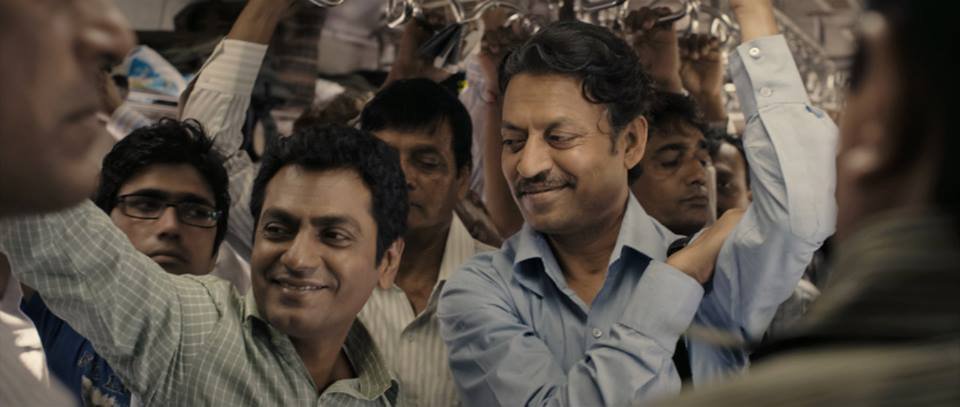
There’s the curmudgeonly peon, played quite dextrously by Irrfan Khan (pictured above right), who, coming to the end of a long career and as a widower, has little better to do with his spare time than berate the kids who play near his apartment block.
His life is completely transformed by two new people in his life.
The first is the new clerk, who is going to take over his role, beautifully played by Nawazuddin Siddiqui (pictured above left). Something of a star on the independent circuit in India, he has a definite gift for comedy (more so than the unhinged violent roles he played in both “Miss Lovely” and “Gangs of Wasseypur”).
Some of you may have seen him in “Bombay Talkies” which featured as the closing gala film at the London Indian Film Festival last year. He was in the film directed by Dibakar Banerjee. If you’ll recall “Bombay Talkies” was made up of four films by four different directors to commemorate 100 years of Bollywood cinema last year.
Banerjee’s tale was a surreal take on the Bollywood dream and it was played with such charm and poignancy by Siddiqui that the short film, adapted from a Rabindranath Tagore short story, worked.
Siddiqui brings the same talent to his role in “The Lunchbox”.
The other person who inevitably changes the old man’s (Khan) life is the lonely housewife reprised by Nimrat Kaur.
Kaur too has a gentleness and a sense of longing that’s hard not to be exercised by, and the trio actually make a collection of souls who are lost in the metropolis that is Mumbai and are trying to find some form of connection with the world outside.
Siddiqui’s character – about to marry – seems to have much more of life’s big questions worked out (as much as anyone can) but at the heart of his troubles is his new job.
Khan’s character soothes all that and in doing so also finds more confidence to woo Kaur.
It’s a lovely confection of a film, perhaps too sweet and sentimental for some, but it shows that India can make films without a song and dance and that can be judged by a more western aesthetic.
If you’ve been conflating Indian films with Bollywood, this will change all that.
See it and you’ll realise there are rich stories to be mined by Indian filmmakers who want to enter onto a global stage.
ACV rating: 3/5
Related stories
[youtube width=”300″ height=”300″ video_id=”5sl7YsQiNCU”]