‘Indian Ink’ – Stoppard play is of a different time…
Review of a complex play about art, romance, politics and memory but on the face of it appears to be a story of the British during the Raj…
By Suman Bhuchar
THE COMPLEXITY lies in the fact that there are three main plots which interweave with each other and there is a lot of exposition.
‘Indian Ink’ was originally written by Tom Stoppard for his partner, Felicity Kendal to have a starring role and since both of them had a connection to India, the play was set there.
Kendal was born in India and lived there in the early part of her life; Stoppard was evacuated there as a Czechoslovakia-born Jew during the Second World War and went to a boarding school in Darjeeling, before settling in England with the rest of his family.
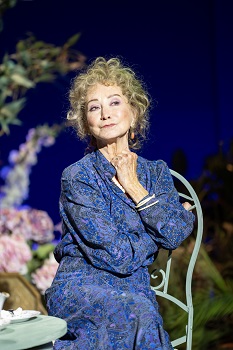
The play was first performed in 1995, when Felicity Kendal played the part of Crewe and in this revival at Hampstead Theatre, directed by Jonathan Kent, she plays her older sister, Elizabeth Swan.
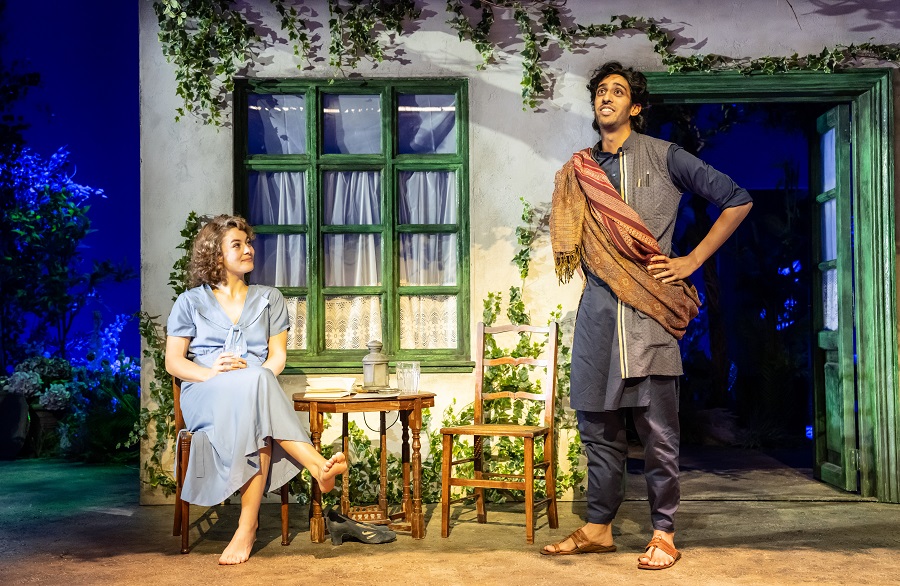
It’s the story of a Bloomsbury group poet Flora Crewe (Ruby Ashbourne Serkis) who goes to India during 1930 for health reasons and to give a talk at the Theosophical Society (an influential group of mostly English artists who wanted to explore spirituality without abandoning rationalism) of a small fictitious place called Jummapur.
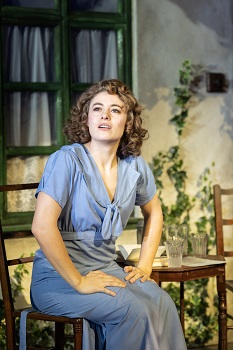
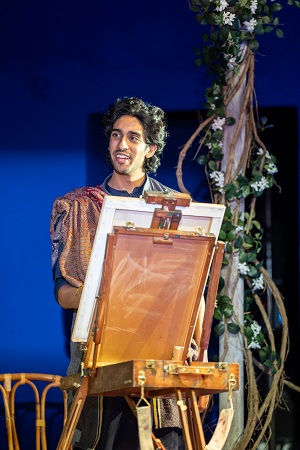
Flora is a free spirited independent thinking woman and here she meets a poet called Nirad Das (Gavi Singh Chera) who offers to paint her.
Juxtaposed against this is the story of an American biographer, Eldon Pike (Donald Sage Mackay) who is researching her work after her death and wants to publish the definitive biography complete with footnotes to her poems and story.
That is set during the 1980s and he comes to tea with Swan to discuss facets of her sister Flora’s life and work.
It’s an interesting exploration of how the present excavates the past, what we remember, how memory works and what should be archived.
For instance, when he asks about why she mentioned the ‘Queens Elm’ in a particular section and ponders on its significance, Swan quickly replies “It’s a pub in the Fulham Road.”
It’s funny and ironic. Swan has the best put downs.
A third aspect of the plot is the interaction between Swan and Das’s son, Anish (Aaron Gill) who is also a painter and wants to set the record straight about his father’s work and political leanings.
Both of them have a personal interpretation about Flora and Nirad’s relationship but disagree about politics around Indian self-rule.
It’s a split stage beautifully designed by Leslie Travers, where on the left side Swan is entertaining Pike, while on the right there is a small cottage with Crewe in India – so while she’s writing her letters to her sister, Swan of coming to India that action is performed in the present and the audience see both sides of the perspective.
The Hampstead stage lends itself to such lavish sets and this show features a railway carriage, an outside garden and a dak bungalow (post house), surrounded by greenery and flowers. Some of the scenes are played on the sides of the auditorium.
Nirad Das paints her on the front veranda and while that’s happening there is a lot of chat between them about art, and ‘rasa’ (Indian aesthetics) where she asks him to “be more Indian”, as he talks about England and English culture in order to connect with her.
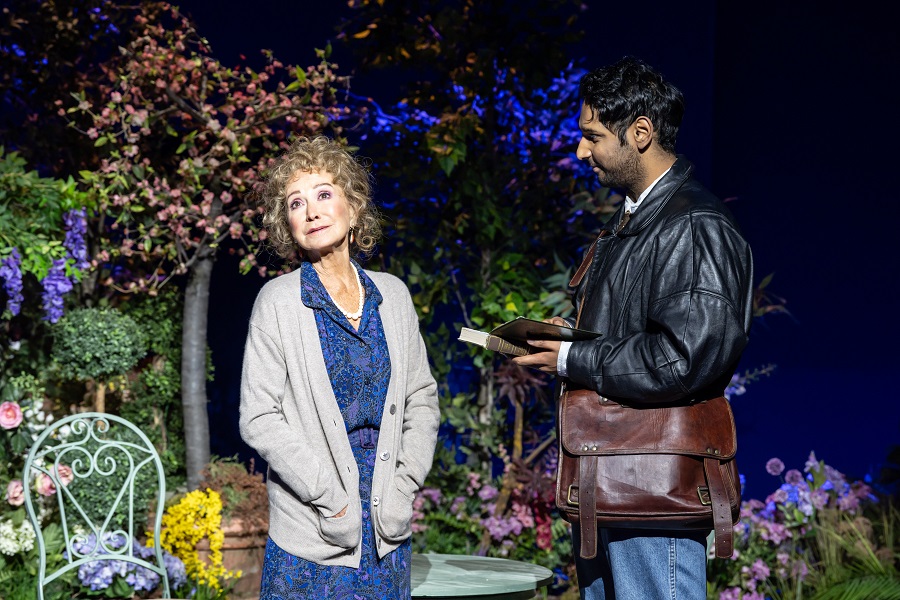
The play is quite wordy and Stoppard asking the Indians to “be more Indian” appears offensive.
It doesn’t deal with the complexity of the Indo-British encounter that either turned people into “babus” for the Indian civil service or English caricatures.
Chera plays Das as an awkward geek slightly stiff and uncomfortable, because in 1930s hanging out with a white memsahib was not a good look.
We see her life and her relationship evolve with Das while at the same time she meets the resident David (Tom Durant-Pritchard) and goes to the local club with him.
There is some discussion about nationalistic politics of the day but those happen offstage and are just told to the audience.
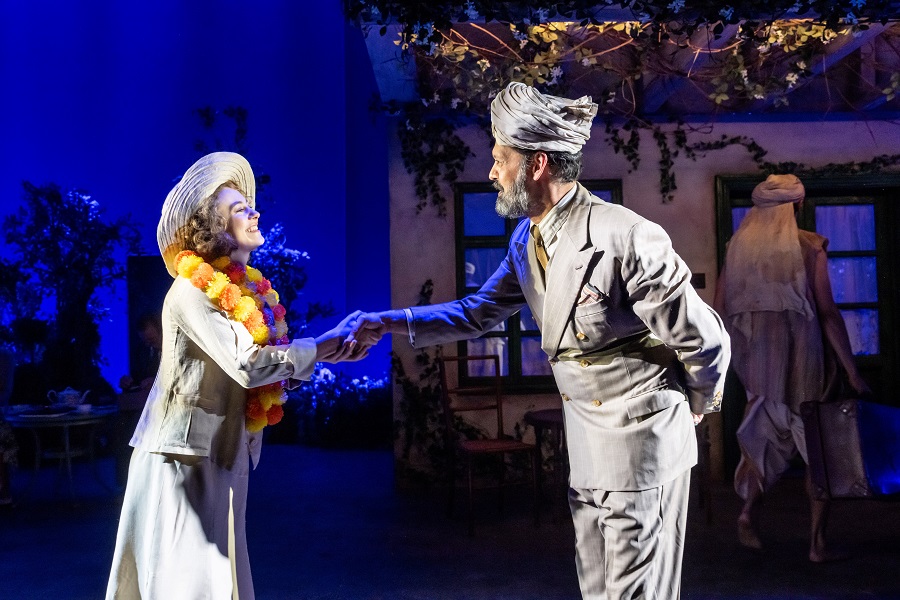
Most of the South Asian cast are just there to serve the main story – Sagar Arya appears as Coomaraswami – the President of the Theosophical Society, who welcomes Crewe to Jummapur; Irvine Iqbal as the Maharajah with a car collection and later a politician; Neil D’Souza as the guide Dilip who helps Pike wander around India looking for clues for his book, and Sushant Shekhar as several servants.
Did we enjoy it?
Hard to say. The performances were good. There is a lot to digest in the text and the sections on how the past is remembered, whether it is through academic biographies or personal perspectives is absorbing.
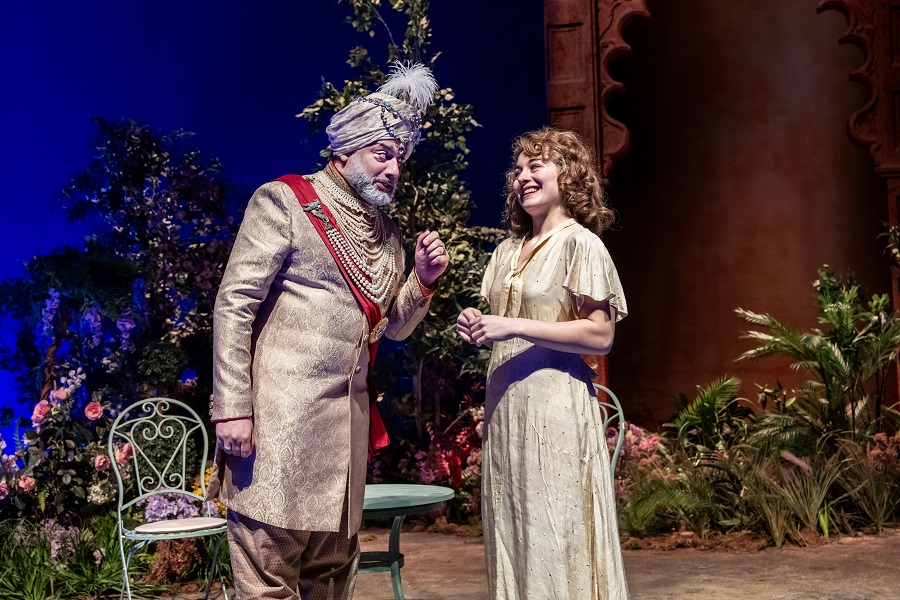
Mostly, it’s a kind of Raj tinted sentimental view of India.
It is slightly patronising and nostalgic.
ACV rating: **** (out of five)
All pictures: ©Johan Persson
Listing
Play runs at Hampstead Theatre until January 31 and then tours to Theatre Royal Bath 10-14 February
Hampstead Theatre, Eton Avenue, Swiss Cottage London NW3 3EU
https://www.hampsteadtheatre.com/whats-on/2025/indian-ink
Theatre Royal Bath, Sawclose, Bath BA1 1 ET
https://www.theatreroyal.org.uk/events/indian-ink
Gavi Singh Chera interview – ‘Indian Ink’ – Actor Gavi Singh Chera on Stoppard art & romance play with Felicity Kendal – asianculturevulture.com
Stop Press: The show has now been extended to Saturday, February 7