‘The Indian Army at the Palace’ – thrilling untold story of soldiers at Hampton Court Palace
Exploring British history through theatre and bringing to life what really happened …Ends today
By Suman Bhuchar
HAMPTON COURT is one of those Historic Royal Palaces that is associated with the Tudor Monarch Henry VIII but who knew that it was also home to many Indian army sepoys who camped at the palace in the early 20th century?
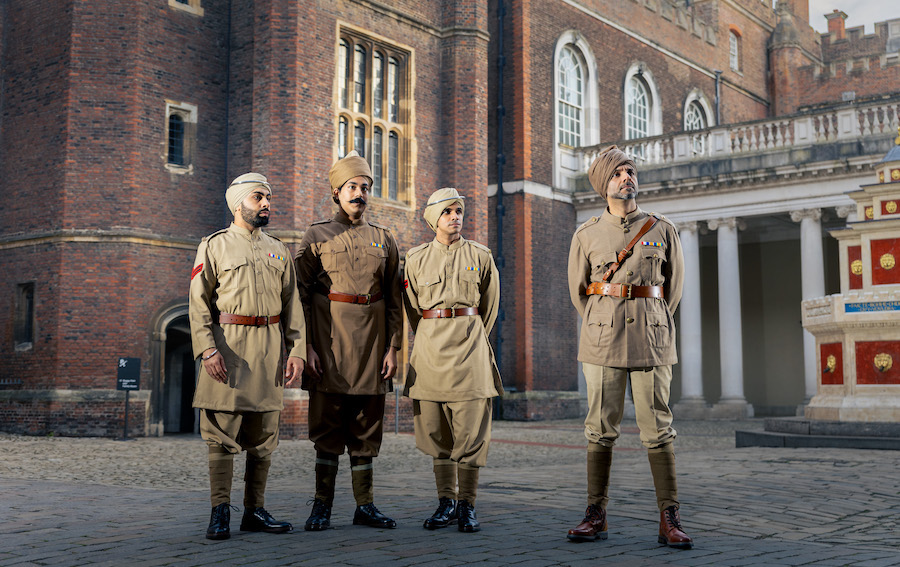
A new exhibition, ‘The Indian Army at the Palace’, currently on show at the Palace, sheds light on these little known facts.
Around 1.4 million Indian soldiers fought in the First World War and many ended up camping in the Palace grounds on a number of occasions, joining coronation celebrations – including those of Edward V11 in 1902 and George V in 1911 as well as participated in peace parades in 1919.
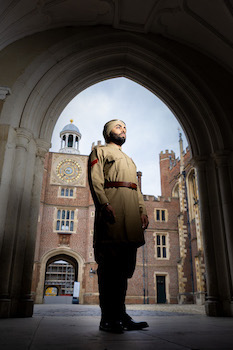
Now, as part of the November Remembrance commemorations, Rifco – a theatre company that reflects South Asian experiences – was invited by Historic Royal Palaces and their community curator, Dr Tejpal Singh Ralmill to use some of the original research material and craft ‘dramatic fiction’ to bring to life these stories. Their brief was to connect the stories with the actual space.
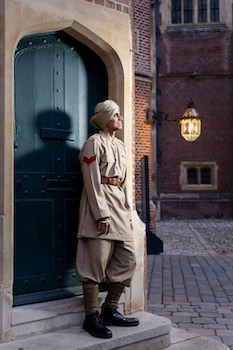
Four actors: Ankur Sabharwal, Raxstar, Satyajit Sarkar and Shashank Budhia, along with artistic director, Pravesh Kumar and associate director, Ameet Chana have created three site specific pieces that are performed in the two rooms of the palace. (The last performances are today).
www.asianculturevulture.com went along to see these stories and can report that are moving and exceptional.
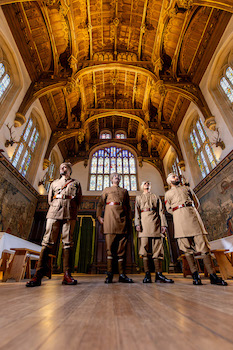
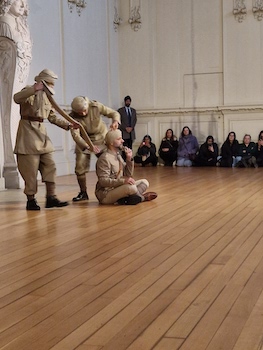
Two of them ‘Chai with the Princess’ and ‘Sepoys and the Spanish Flu’ are performed in The Queen’s Guard Chamber and ‘Sepoys in the Great Hall‘ is performed in the Great Hall.
‘Chai with the Princess’ opens with a soldier playing the harmonium and another tying his turban. They are excited about the opportunity to have tea with the Princess who is Sophia Duleep Singh – grand-daughter of Maharaja Ranjit Singh.
These young soldiers who may have witnessed the Jallianwallah Bagh massacre in Amritsar in 1919 are in London for the Victory Parade which took place in July 19, 1919 to mark the end of The Great War – as the First World War was termed. They idly speculate if she has a dog or ponder their dilemma of what they will say to her.
Pravesh Kumar who was also watching the plays emphaised to acv: ”Anytime I get a reason to talk about Sophia I have to do it, I have to do It.
“The story is inspired by a real letter. They were actually invited and they were very excited. What would it be like talking to a Punjabi princess who is so fierce and that was really interesting and we wanted to write that.
“She was an aristocrat and she fought for the vote. She was of dual heritage but she really warmed to her Indian heritage and celebrated it.”
Kumar explained that for all the three stories, he used the same four characters so in a way audiences meet people who are “part character, part ghost” because they are able to comment on things in a way they might not have been able to, had they been actual sepoys of the time.
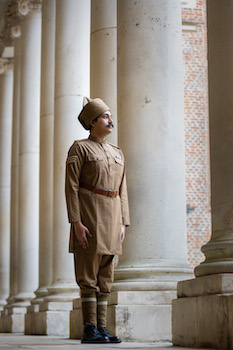
We picked the most common names, Harnam and Mubarak are very common name of real soldiers.
“‘Sepoys and the Spanish Flu‘ story really reminded me of covid and that was a big contemporary connection, he said.
In that story, the sepoys who are unwell are isolated from the rest of the soldiers while they wait to get better and dream of having home cooked food.
‘The Sepoys in the Great Hall’ is a much more about the young men in a foreign space.
All the dramatised pieces use live music which is so inspiring and elevates the stories quite dramatically. The sound also resonates better in the rooms with high ceilings.
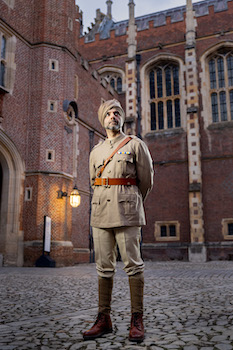
“The soldiers were always singing. I thought it was imperative to get their music in and I did was a lot of research on what the songs would be like and then I worked with Hinal Pattani who composed them and I wrote the lyrics.
“They are new songs but they are based on period ideas. Some are more made up than the others. But what a privilege for us to do our stories and take over these spaces.”
Kumar argues that in a climate where people are putting up flags on lamp posts, it is imperative we talk about our shared history.
“I wish as a child I had this ammunition when I was called the ‘P’ word or whatever I was called, to go ‘by the way, your liberties you are so proud of were fought for by people that look like me – not one, not two but million.
”It becomes important we talk about our histories in these spaces but also I think this is enroute to changing the curriculum where we’re not only talking about Henry VIII at Hampton Court, we are talking about these soldiers at Hampton Court too and this is how we do it.”
At the moment, the shows are only on at weekends until the end of November but www.asianculturevulture.com hopes that these mini site specific shows will inspire a bigger piece for stage as well as continue to be an integral part of the ‘The Indian Army at the Palace‘ exhibition which runs until February 1, 2026.
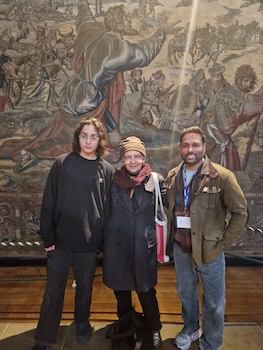
You need to purchase a ticket to visit Hampton Court in order to see the exhibition and palace and the grounds. The exhibition is tucked away in a small room at the back
and could be better curated to give it some more breathing space.
Today are the last shows…
Pictures: ©Historic Royal Palaces
Listing
Hampton Court Palace, Hampton Court Way, East Molesey, Surrey KT8 9AU
https://www.hrp.org.uk/hampton-court-palace/whats-on/the-indian-army-at-the-palace/
https://www.hrp.org.uk/hampton-court-palace/visit/tickets-and-prices/